II. Hosts: WFT has an extremely wide host range including weeds, floricultural crops, field crops, and tree crops. This species is a vector of tomato spotted wilt virus.
III. Description: WFT adults are
slender, about 6/100 inch (1.5 mm) long, yellowish, and hold
their fringed wings over their backs. Larvae are smaller and
wingless, but otherwise resemble adults. Thrips generally move
quickly to shelter when disturbed.
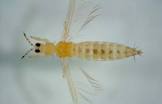
UNH image
IV. Biology: Little is known about WFT biology in the eastern states. Research conducted in 1992 at Penn State showed that WFT adults emerged from soil overwintering sites in May after most stone fruit bloom was complete. The WFT population built up on weeds, especially clover, in and around orchards throughout the season. Density of adult WFT in water traps peaked in July through September in stone fruit orchards in south-central Pennsylvania in 1992. The generation time of this species requires about 250 DD50.
V. Injury: WFT produces two types of injury on nectarine. During the bloom period, adults and larval WFT feed in flower parts and under the shuck of stone fruits where they are protected from exposure to insecticides. Feeding at this time causes scars (left photo below) on the fruit surface that expand as the fruit grows. In apples, similar feeding habits can result in a condition called pansy spot, a russeted area surrounded by a white halo. As stone fruits ripen, they again become vulnerable to adult and larval WFT feeding on the fruit surface. The thrips feed in protected sites, such as in the stem end, the suture, under leaves and branches that contact the fruit, and between fruit. Feeding at this time results in silvering (right photo below), a benign surface blemish, that can be quite extensive if thrips populations are unchecked.
On grapes, thrips may feed at bloom time,
hiding beneath the cap as it shatters, if the cap material does
not fall away. This can give rise to halo or starburst
type of injury, important only on table grapes.
VI. Monitoring: The first critical period to consider control of WFT is stone fruits is during pink through shuck fall. Blossoms should be shaken onto a yellow surface to determine the presence of WFT. Extension guidelines in California recommend treatment if adults infest more than 10% of the blossoms or if nymphs are present.
The second critical control period extends from fourth cover through harvest. Observe fruit of the earliest ripening varieties during final fruit swell for silvering or for presence of thrips. Pennsylvania recommendations include sampling for adult thrips on 10 fruits at each of five sites per orchard. Sample fruit from the ends of branches in the lower part of the canopy. An action threshold is 5 thrips per 50 fruits, especially if silvering is occurring. Extensive silvering can result in down-grading of the fruit.
VII. Other sources: Penn State
page; Washington
State University page.