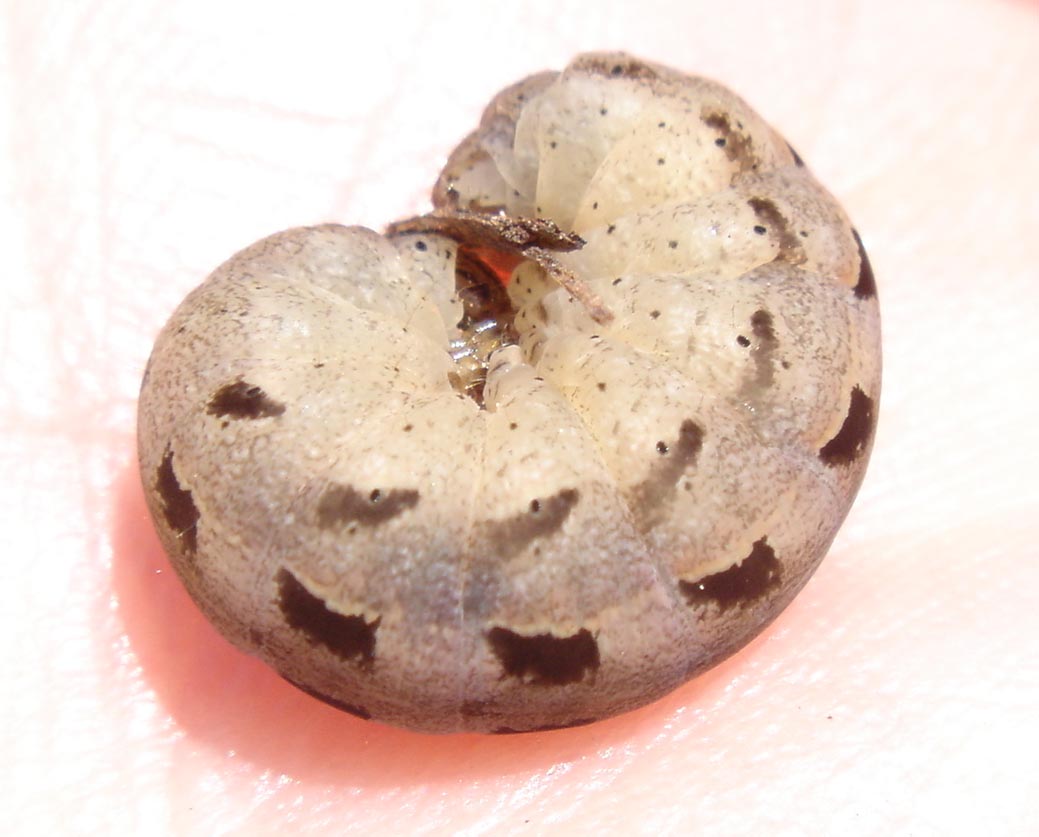
Climbing cutworms
Dingy cutworm - Feltia faculifera
(Guenee) (1 brood; Aug. - Nov.)
Spotted cutworm - Xestia c-nigrum
(L.)
(2 broods; May - July, Aug. - Sep.)
Darksided cutworm - Euxoa messoria
(Harris) (1 brood; Aug. - Sep.)
Variegated cutworm - Peridroma saucia
(Hubner) (2 brood; Apr. - Oct.)
Mottled cutworm - Abagrotis alternata
(Grote) (2 broods; Jun. - Oct.)
W-marked cutworm - Spaelotis clandestina
(Harris) (2 broods; May - Oct.)
I. Introduction: There are many
species
of cutworms that are found on many different
crops. Several species, known as the climbing cutworms, tend to
climb
fruit trees in spring
and feed on the buds. The large larvae cause similar kinds of
injury to
fruit and ornamental
trees and the robust adult moths of each species are similar in
appearance to each other. At
least 10 species of climbing cutworms cause damage to fruit
trees in
the eastern U.S. and
Canada, but the six species listed above are the most common and
widely
distributed. Climbing
cutworms are sporadic pests that are mainly serious problem of
young
orchards, especially with
sandy soils, where they may completely strip the foliage and
buds in
the spring.
II. Hosts: Climbing cutworms can be found on apple,
peach,
pear, and plum and grape
are economically important hosts. Ash, boxelder, birch,
boxelder, maple
and other species
are also fed upon.
III. Description: The larvae of climbing cutworms are
large,
smooth caterpillars,
measuring 1.2 to 1.6 inches (30 to 40 mm) when fully grown
(Plate 71).
The body has only
a few hairs and the head capsule is usually brown or black; some
have
unusual markings on
the head. Larvae of the different species vary in color with
most
species having a dull
gray-brown background color with various species having stripes,
spots,
or marked with
dark brown, black, yellow and white splotches. The dark brown
pupae
resemble those of
leafrollers, but are much larger in size [i.e. >0.8 inch (20
mm)].
The adults are dark
brown or grayish colored moths that look quite similar and have
wingspans of about an
inch (25 mm).
IV. Biology: The biology of the various climbing cutworms
varies considerably
but the peak flight periods and generations for some of the
common
species are listed
above. The most common species have one or two generations per
year and
overwinter
as half-grown larvae on the soil in leaf litter and orchard
debris. A
few other
species overwinter as eggs or even as adults. The species which
overwinter as larvae
begin to become active as the weather warms, generally in
mid-April.
This group of
moths derives its name from the larval habit of climbing trees
to feed
on buds and
young foliage during the night, and then crawling back down to
the
ground to seek shelter
under leaf litter or debris on the orchard floor during the day.
The
larvae often curl
up tightly when disturbed. Hundreds of larvae may feed on a
single
tree. The larvae
mature by May and enter the soil to construct pupal chambers. In
two-generation
species, second generation feeding is minor.
Adult emergence varies among species as shown above, but the
most
common species
are on the wing from June through September. Eggs are laid on
leaves,
twigs, bark
or even grasses. Newly hatched larvae of the single generation
species
seek low
vegetation on which to feed until fall when they move to the
ground
seeking
overwintering sites. Species with multiple generations per year
generally
overwinter as eggs.
V. Injury: Most injury from climbing cutworms occurs in
the
spring when
they feed on fruit buds or blossoms. The larvae generally feed
only on
the lower
central portion of the tree around the trunk, but under high
population
pressure,
complete limbs or even whole trees may be stripped. Small trees
are the
most
severely affected and abnormal growth can result from heavy
defoliation
several
years in a row. Feeding by cutworms on the foliage or fruit
during the
fall or
summer is rare, but may occur when the variegated cutworm is
present.
VI. Monitoring: The best way to monitor is to check buds
in
the lower center
of young trees for signs of first feeding early in the spring
and to
check the leaf
litter around the base of the tree for overwintering larvae.
Examine
sites on the
ground for rolled up larvae (under clods of earth, etc.). The
larvae
can only be
observed feeding in the trees at night. Black light traps
readily
capture the adults,
but because of the many host plant species and similar looking
nonpest
species, it is
usually not an effective way to monitor.
Because of the sporadic nature of this pest complex, thresholds
have
not been
established. Small trees are harmed the most by heavy
defoliation, but
large
trees can withstand even several successive years of heavy
defoliation
in spring.
This is taken primarily from a chapter by
D.G.
Pfeiffer, L.A. Hull, D.J. Biddinger, & J.C. Killian on apple
indirect pests, reprinted with permission from Mid-Atlantic
Orchard
Monitoring Guide, published by NRAES, 152 Riley-Robb Hall,
Ithaca,
New York 14853-5701.
Return to Mid-Atlantic
Regional Fruit Loop